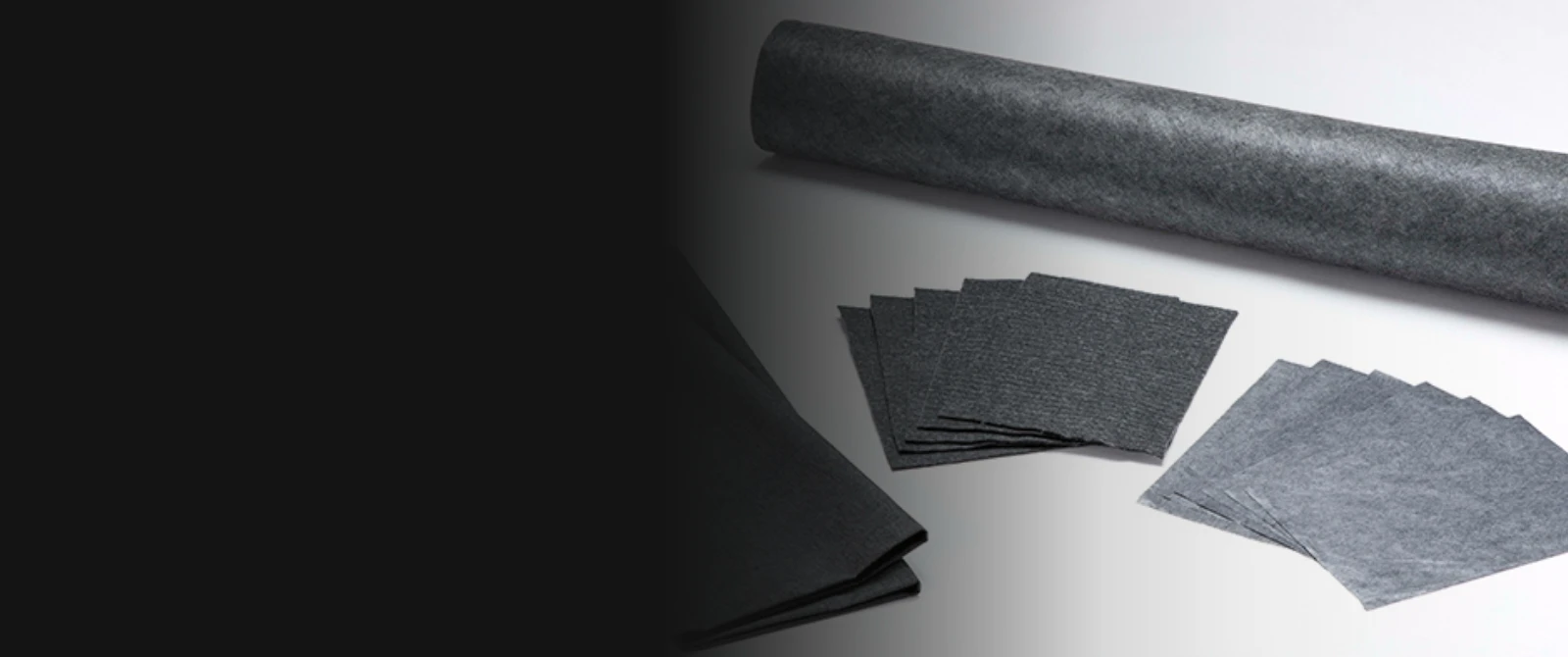
Flame retardant/barrier textile
GULFENG™
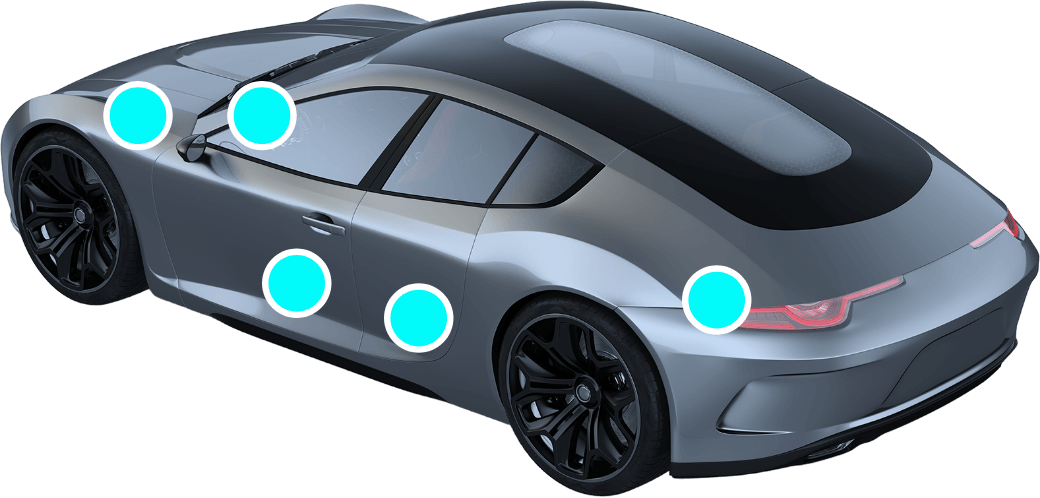
Mounting locations
- Batteries
Benefits
High reliability against fire and heat, combined with the flexibility to conform to curved and complex geometries.
By combining high flame retardant fusible and non-fusible fibers,
flame-shielding performance is achieved that prevents flames from passing to the opposite side, even
with thin materials. Protects against the spread of fire and enhances safety around heat sources such as
batteries.
The flame barrier also reduces heat transfer, providing thermal insulation. Reduces
thermal damage to surrounding components and increases overall system durability.
Binderless,
flexible, non-woven fabric form allows for perfect attachment to complex shapes and curved surfaces.
This material combines workability as well as functionality.
Features

Flame-shielding
When exposed to flame, the combination of fusible and non-fusible fibers with high flame retardant properties forms a carbonized film. It can block flames without needing to have the relatively high basis weight and thickness typical of conventional flame-retardant materials.
Thermal insulation
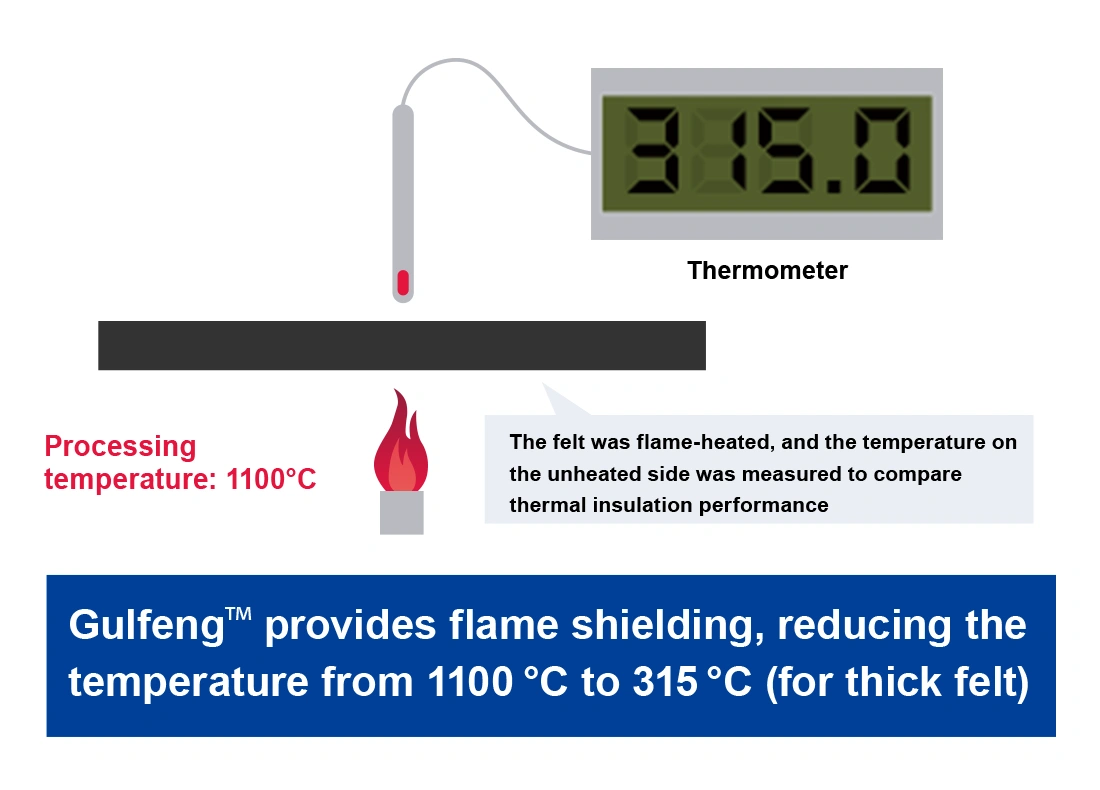
By blocking flames, it also provides thermal insulation.
(See figure to the right) (see figure below)

Conformability
Its binderless, flexible textile form also allows for good formability during molding and application.
Fire spread prevention/flame retardancy
Use Cases
#01
Battery/
fuel tank
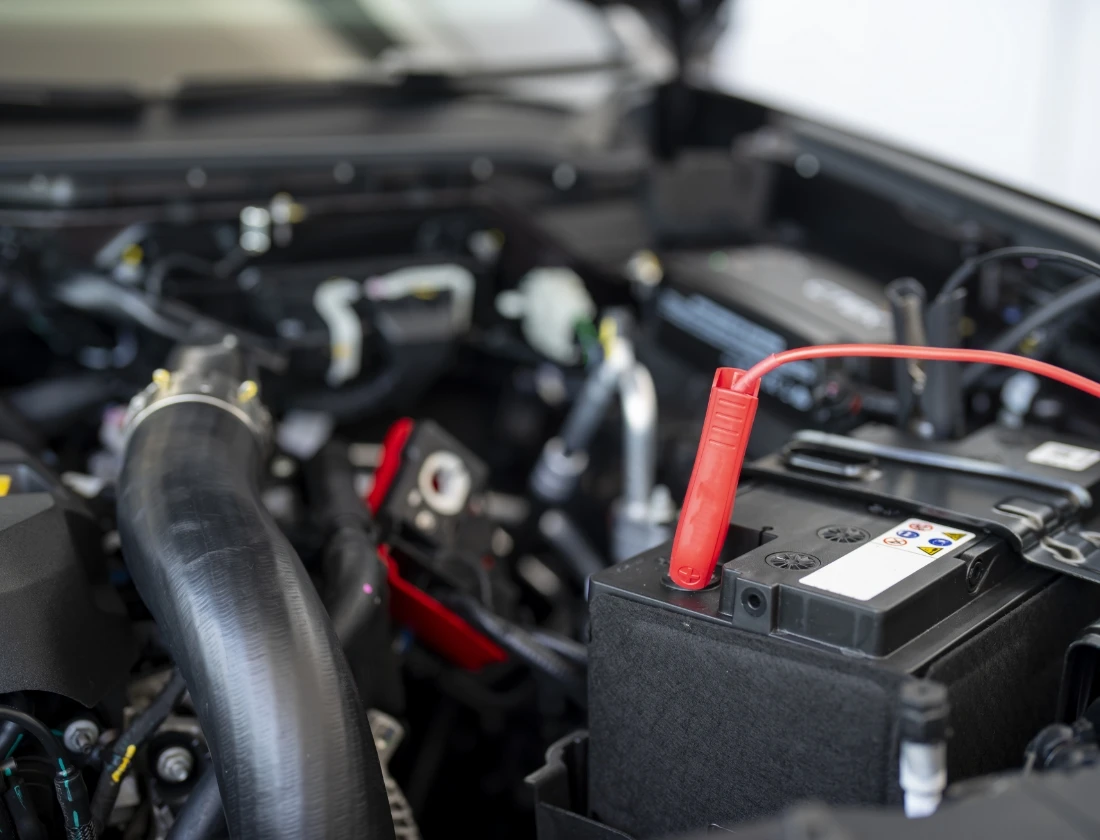
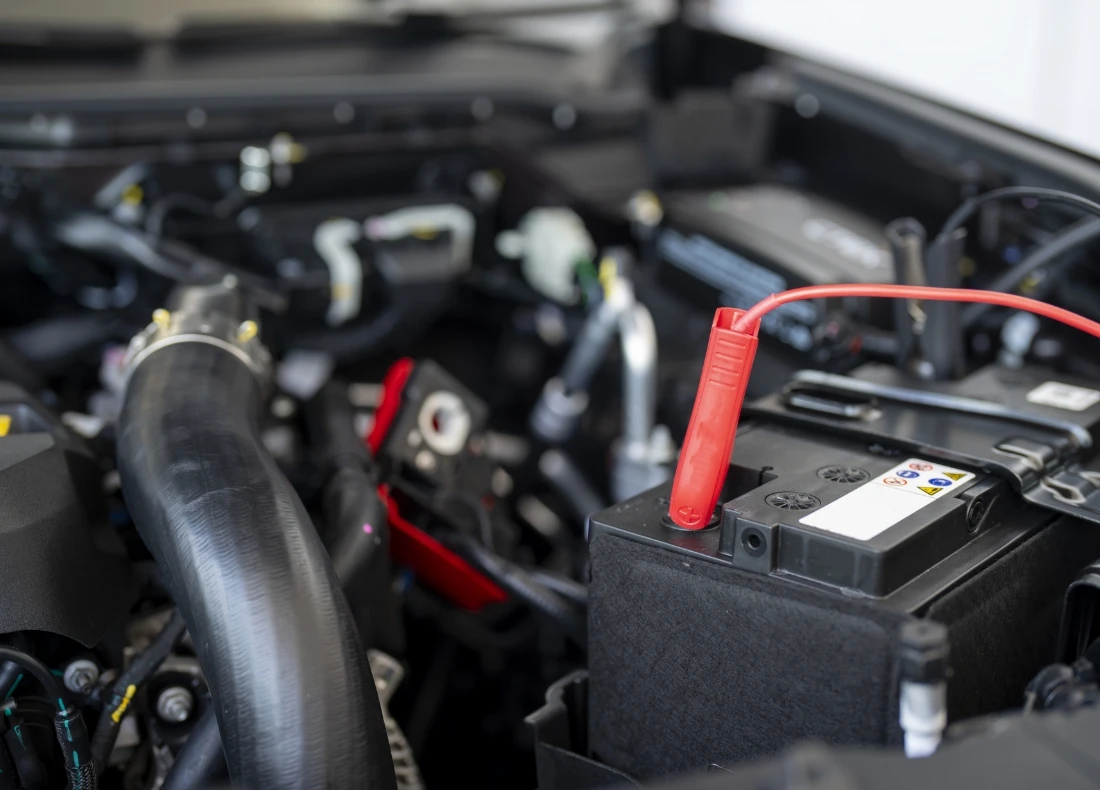
High-density types prevent holes from forming even after a flame contact testing lasting 10 minutes using a 1000°C burner, effectively preventing fire from spreading when a battery has combusted. Compared to inorganic materials, it is highly flexible and can be used in a way that follows the shape of the part. We have developed a thin-profile design that is suitable for installation space, as well as a type that we have developed to maintain insulation even after carbonization. We can customize to suit your application and requirements.
Related Products
Related Products
TORCON™
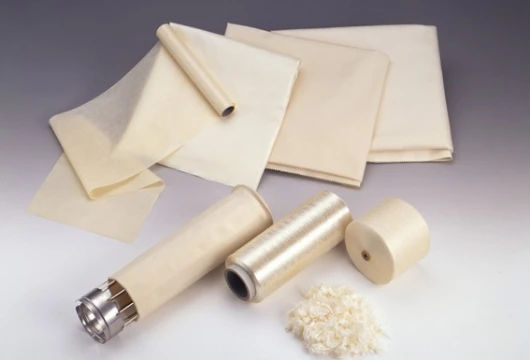
Excellent heat resistance, chemical resistance and insulation improve drive motor reliability and durability, contributing to electric vehicle performance.
Torelina™
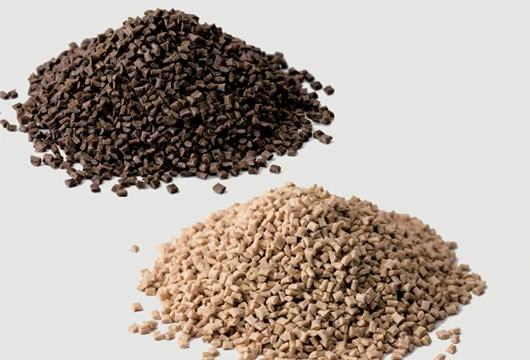
High heat resistance, chemical resistance and dimensional stability contribute to the reduction of weight, reliability and environmental friendliness of power trains and cooling components.
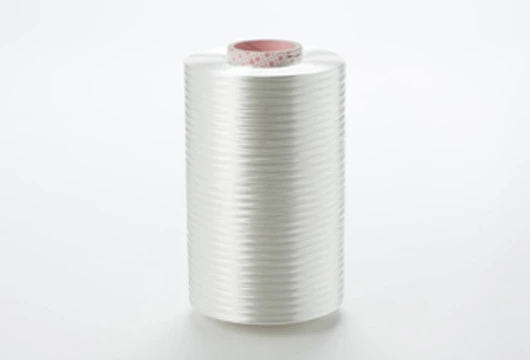
Promilan™
High strength, high modulus of elasticity enhances the safety and durability of airbags and tire cords. Contributes to weight reduction.